Volgograd: Where History Shaped Stone and Memory Endures
Volgograd: Where History Shaped Stone and Memory Endures
Volgograd stands as a city carved by war and rise from ashes, its streets echoing with the distant thunder of Soviet resilience and the unyielding spirit of a nation that refused to be erased. Once known as Stalingrad, the city endured one of the fiercest battlegrounds of the 20th century—Operation Uranus turned into the Battle of Stalingrad, a turning point in World War II that left an indelible mark on Russian national consciousness. Today, Volgograd is not merely a post-war city but a living testament to sacrifice, memory, and historical tourism, drawing visitors from across Russia and the globe.
Stalingrad’s transformation into Volgograd, formalized in 1961 amid the Soviet Union’s de-Stalinization campaign, marked both a political shift and a symbolic renaming—stripping the relics ofdictatorship to honor a collective laboratory of survival. Yet, the city’s soul remains rooted in the rubble-strewn courts and mass graves where hundreds of thousands perished under relentless siege from 1942 to 1943. “Stalingrad is more than a place on the map—it is a wound that never fully healed,” observes Dr.
Elena Sokolova, a military historian at Volgograd State University. “Its stones bear witness to both ruin and rebirth.”
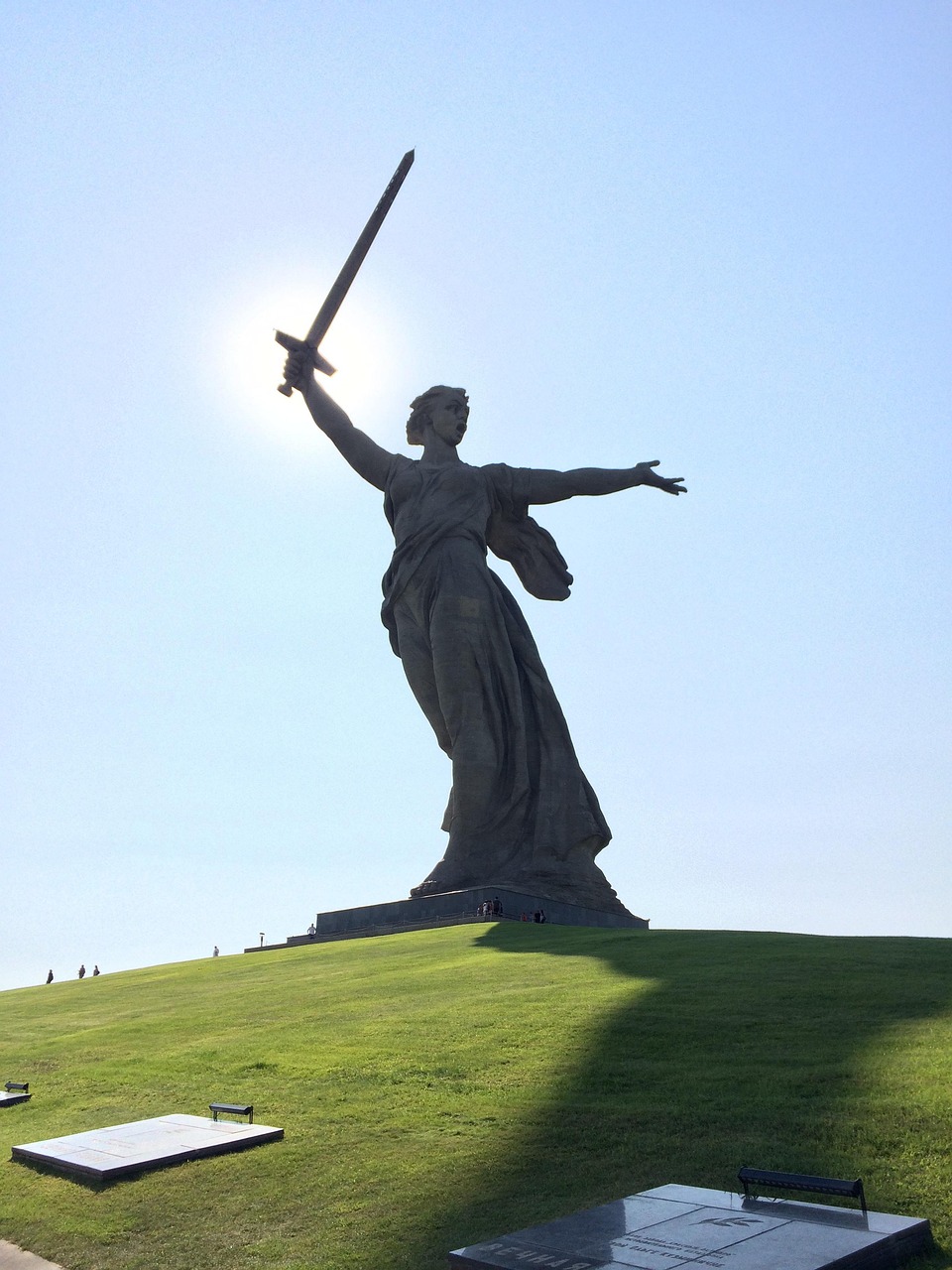
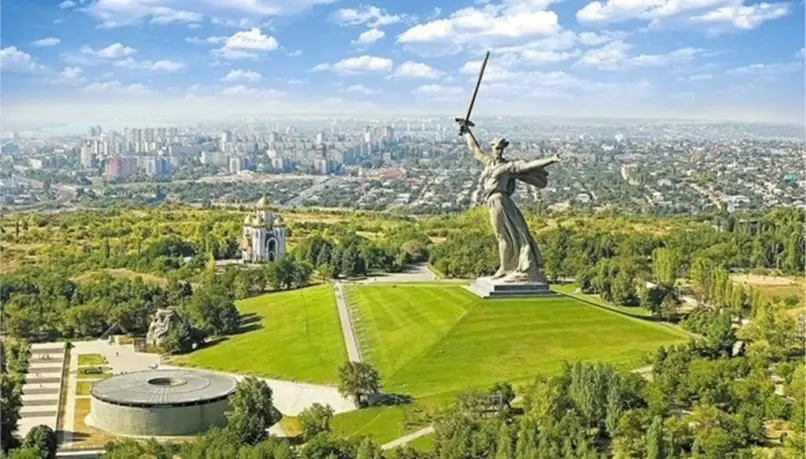
At the heart of the city’s historical gravity lies the UNESCO-listed Motherland Calls monument—an awe-inspiring colossus rising 85 meters above the Volga River. Unveiled in 1967, this towering female figure clad in armor and folded arms dominates the plaza, symbolizing victory and eternal vigil.
But beyond its grandeur, Volgograd’s battlefield zones, such as the Presnenskaya Hill and theoydne area, remain preserved as open-air museums, where trenches, bunkers, and recovered artifacts invite reflection on the human cost of war. “Visiting Stalingrad isn’t just about seeing stones—it’s about touching history,” says local guide Ivan Petrov, who leads tours retracing Soviet soldier paths.
The Battle of Stalingrad, a turning point in World War II, reshaped global conflict dynamics.
Lasting from August 1942 to February 1943, the engagement saw Red Army forces encircle and annihilate Germany’s 6th Army under General Friedrich Paulus. Soviet troops, braving famine, freezing winters, and relentless assaults, turned streets into blood-slatted corridors—a struggle memorialized in countless narratives, literary works, and cinematic epics. “Volgograd embodies the cost of freedom,” states Dr.
Sokolova. “Every block of rubble tells a story of endurance that outlasts time.”
Today, Volgograd balances its storm-torn past with cultural revitalization. The city hosts annual memorial events, including the Stalingrad Day commemoration, which draws military delegations, descendants, and international visitors.
Meanwhile, urban development blends Soviet monumentality with modern infrastructure—art galleries, museums like the Trippy Battle Museum, and multipurpose cultural spaces invite both remembrance and forward-looking discourse. “We pay tribute not to erase pain, but to ensure it inspires,” says Volgograd Mayor Aleksandr Nikulin.
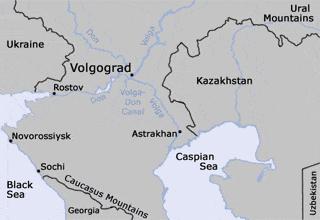
Geographically, Volgograd occupies a strategic stretch on the western bank of the Volga River, a fact that made the city a crucial defensive and supply hub during the war.
Its narrative is also woven into broader regional identity: the Volga’s life-giving currents cross the historical shadow of the battlefield, reminding visitors that memory flows as continuously as the river itself. From student groups studying tactics to international diplomats, the city’s lessons of unity, sacrifice, and resilience resonate across generations.
Volgograd stands as a monument not only to destruction, but to reconstruction—both physical and collective.
It invites every pilgrim to walk where history unfolded in fire and sacrifice, not to dwell in sorrow, but to honor the indomitable spirit forged in flumes of war. In Volgograd’s soil lies not only the memory of a battle, but the enduring proof that history, when honored, becomes a living force.

Related Post
Paul Reubens: Peewee Herman’s Velocity Icon Dies at 70, Ends a Pub Crawl With Legacy That Endures</h2> In a twilight marked by both cinematic memory and untold facets of his life, Paul Reubens, the man behind the slobbery, eccentric, and outspoken Peewee Herman, passed away at 70. Known for redefining childhood rebellion on screen, Reubens’ death closes a chapter in American pop culture, one that blended vulgar humor with heartfelt authenticity. Once a household name from the 1980 hit film, his legacy extends far beyond the red-and-white striped shorts, now inseparable from the character who captured a generation’s cantankerous charm. <p>Born in Baltimore, Maryland, in 1952, Reubens emerged not just as an actor but as a performer unafraid of pushing boundaries. His embodiment of Peewee Herman—a defiant, snarly-haired antihero—blended physical comedy with sharp, streetwise dialogue that struck a chord with audiences hungry for authenticity. The Peewee Herman series, though commercially successful, often overshadowed Reubens’ broader artistic range. Few realize he appeared in Broadway plays, voice acting, and even avant-garde theater, proving his talents extended well beyond children’s television. As *Chicago Sun-Times* noted in its obituary, “Reubens was more than a child star—he was a performer who leveraged innocence into subversion.” <h3>A Career Built on Risk and Voice</h3> Reubens’ early career was defined by bold choices. Before Peewee, he starred in off-Broadway productions such as *The Spook Who Sat by the Door*, where his dramatic range simmered beneath the surface, hinting at complexity beneath the goof. With Peewee Herman, launched in 1985, he abandoned subtlety entirely: “Make them laugh, make them weird, make them remember,” Reubens once said, capturing the essence of his performative philosophy. The character’s signature voice—raspy, gravelly, dripping with sass—became iconic, a vocal signature recognized by millions. <p>The 1980s explosion of Peewee Herman’s films turned Reubens into a curious cultural paradox: a serious actor whose most beloved role was pure absurdity. Yet, in interviews, he insisted his performance was deliberate—a nuanced portrait of teenage defiance. “I didn’t play a cartoon character,” he explained. “I played a version of me—rough around the edges, protective of friends, screwed up, but loyal.” This authenticity resonated in an era increasingly skeptical of artificial corporate branding, making Peewee’s appeal timeless. <h2>Personal Life and Shadows Beyond the Spotlight</h2> Beyond the screen, Reubens navigated a life marked by both acclaim and private complexity. Always a confessed fan of rock ’n’ roll and jazz, his persona extended into music and visual art, though these pursuits rarely entered mainstream discourse. He resided in New York’s Greenwich Village, a neighborhood steeped in artistic tradition, maintaining long-standing friendships with peers across disciplines. <p>Despite the glare of fame, Reubens valued privacy fiercely. The Velvet Crimeoclub — a performance space and cultural hub — served as a sanctuary where he entertained trusted artists and writers. In rare public appearances, he spoke candidly of battling creative stagnation and the weight of typecasting, once remarking, “People remember the mask, not the man.” Such reflections humanized the performer, revealing layers beneath the red-and-white attire. <h3>Leadership, Mentorship, and the Legacy of Peewee</h3> Reubens’ influence reached beyond performance into mentorship. He supported emerging artists through workshops and collaborative projects, particularly those exploring boundary-pushing storytelling. The Peewee Herman Archive, now studied in theater programs, illustrates how he transformed personal quirks into universal themes of identity and belonging. <p>The character became a cultural touchstone, symbolizing youthful rebellion and resilience, but Reubens resisted reducing himself to a symbol. “Herman isn’t me,” he clarified in *Sun-Times* features, “he’s a story I inherited—and a story I continue telling, oddly enough, decades later.” This duality—public icon, private craftsman—defined his enduring presence. <h2>Enduring Impact: Why Peewee Herman Still Slaps the Nerve</h2> Even after the curtain fell, Peewee Herman retains pulse in internet memes, fashion revivals, and genre homages. His snarl, “You ya ridiculous—bury me!” echoes in viral clips and social commentary. Yet Reubens’ true legacy lies not in viral fame but in the authenticity he brought to every role. <p>Critics and fans alike praised his ability to fuse humor with emotional truth. As theater historian Dr. Elena Park observed, “Reubens taught audiences that vulnerability and absurdity coexist. He made slobberness feel sincere.” Whether in a Intervals show, a Broadway curtain call, or a private art session, Paul Reubens remained fundamentally creative—too often typecast, never fully understood. <h1>Paul Reubens, Peewee Herman’s Velocity Icon Dies at 70 — Ends a Velocity Legacy That Never Grew Old

The Enigmatic Power of Amggvalues: Decoding Trend Analysis and Performance Metrics

How to Cast Your Vote & Decode the MTV VMAs 2025 Nominees: A Complete Guide

From Shakespearean Stages to Modern Screens: The Rise and Evolution of Charlie McDermott


